Licensed in California · NMLS #362311
EZOnline MortgageCalifornia Home Loans
Apply
HomeLoan OptionsConstruction
Loan Options · Specialty

Construction-to-permanent loans in California: Build your home.

Want to build a home instead of buying one? A construction-to-permanent loan finances the building process and then becomes your regular mortgage when the home is done. This page explains how it works, in plain language.

This loan is also useful for major projects like building an ADU (accessory dwelling unit), which are increasingly popular in California.

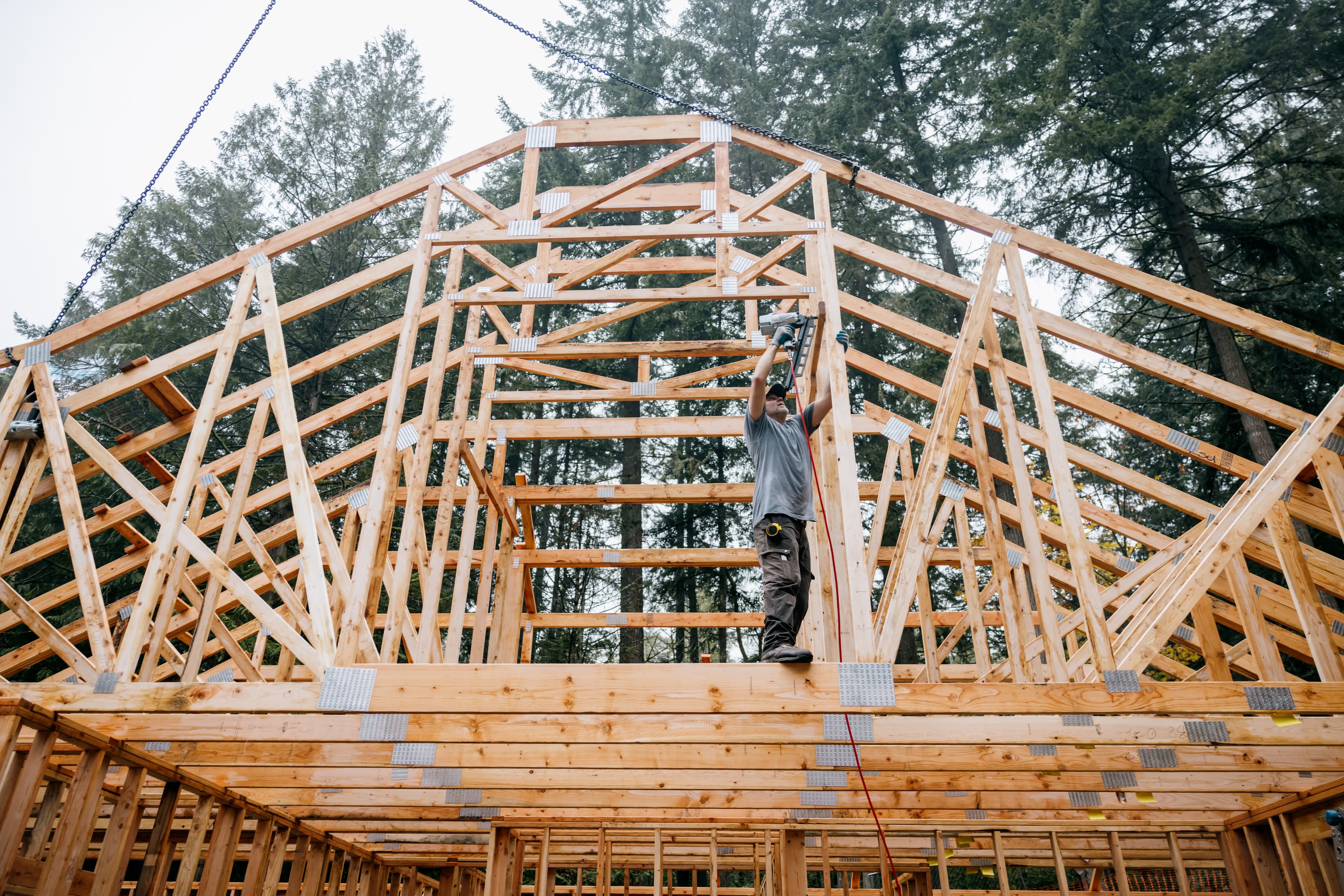
A construction worker framing a new California home financed with a construction loan
Quick answer

A construction-to-permanent loan pays for building your home in stages, then converts into a standard mortgage once construction is finished. With a one-time close, you sign once and avoid a second set of closing costs. During construction, you usually pay interest only on the money drawn so far. The loan is based on the home's value when complete.

What this means

Building a home is different from buying one. You need money released over time as the work progresses, not all at once.

A construction-to-permanent loan does two jobs:

Construction phase: Funds are released to your builder in stages (draws) as the home goes up.
Permanent phase: When the home is done, the loan becomes a normal mortgage.

A one-time close means you handle both phases with a single loan and a single closing, saving time and costs.

Step by step

How it works

1
Plan and budget. You choose a builder, plans, and a detailed cost estimate.
2
Appraisal on completed value. The lender estimates what the finished home will be worth.
3
Close once (one-time close). You sign for both phases.
4
Construction draws. Funds are released in stages as work is inspected.
5
Interest-only during building. You usually pay interest only on what has been drawn.
6
Convert to a mortgage. When the home is complete, the loan becomes your permanent mortgage.

Requirements (at a glance)

RequirementTypical construction-loan rule
Credit scoreOften 680+ (varies)
Down paymentOften higher than a standard purchase
BuilderLicensed, approved, with detailed plans
ReservesOften required, plus a contingency for overruns
AppraisalBased on completed value

In high-cost California areas, a custom build can exceed the 2026 conforming limit ($832,750, up to $1,249,125 in high-cost counties), requiring a jumbo construction loan. See Jumbo.

Benefits

Build exactly what you want. Custom design and finishes.
One-time close. One signing, one set of closing costs.
Interest-only during building. Lower payments while you wait.
ADU-friendly. Useful for building additional units in California.
Based on finished value. You borrow against the completed home.

Potential drawbacks (the honest part)

More complex. Plans, draws, and inspections add steps.
Bigger down payment. Often more than a standard purchase.
Construction risk. Delays and cost overruns can happen.
Builder requirements. You must use an approved, licensed builder.
Reserves needed. Lenders want a cushion for surprises.
Real-world California examples

What it looks like in practice

Custom home in the foothills

The Garcia family buys land and builds a custom home with a one-time-close construction-to-permanent loan, paying interest only while it is built.

ADU project in Los Angeles

Maria builds an ADU in her backyard using construction financing, adding living space and potential rental income.

Jumbo build in the Bay Area

Marcus's custom home exceeds the conforming limit, so he uses a jumbo construction loan with a larger down payment and reserves. See Jumbo.

Examples are for learning only. Your options depend on the project, your finances, and the lender.

Common mistakes

1Underbudgeting. Always include a contingency for overruns.
2Choosing an unapproved builder. Lenders require licensed, approved builders.
3Forgetting reserves. A cushion is usually required.
4Ignoring the conforming limit. Custom builds can require a jumbo loan.
5Underestimating timelines. Construction can take longer than planned.
6Skipping the one-time-close option. Two closings cost more.
Good questions

Frequently asked questions

A loan that finances building your home, then converts into a standard mortgage when it is complete.

Next steps

Plan a realistic build

Building a home is rewarding but more involved than buying. Start with a solid budget, an approved builder, and a contingency for surprises. EZ Online Mortgage can explain construction financing and help you plan a realistic build budget.

Get Pre-Approved (818) 305-6704
Keep learning

This page is for education only. It is not a loan offer or a promise of approval, rates, or terms. Construction-loan rules vary, and qualification depends on your individual circumstances. Equal Housing Opportunity · NMLS #362311 · CA DRE #01871814.

CallStart my application