Licensed in California · NMLS #362311
EZOnline MortgageCalifornia Home Loans
Apply
HomeRatesFixed vs ARM
Rates · Compare

Fixed vs ARM: which mortgage rate type is right for you?

When you choose a mortgage, you pick between a fixed rate and an adjustable rate (ARM). They behave very differently over time. This page explains both, the risks, and who each one fits, in plain language.

The core difference: a fixed rate never changes, while an ARM starts lower but can change later. Let's break it down.

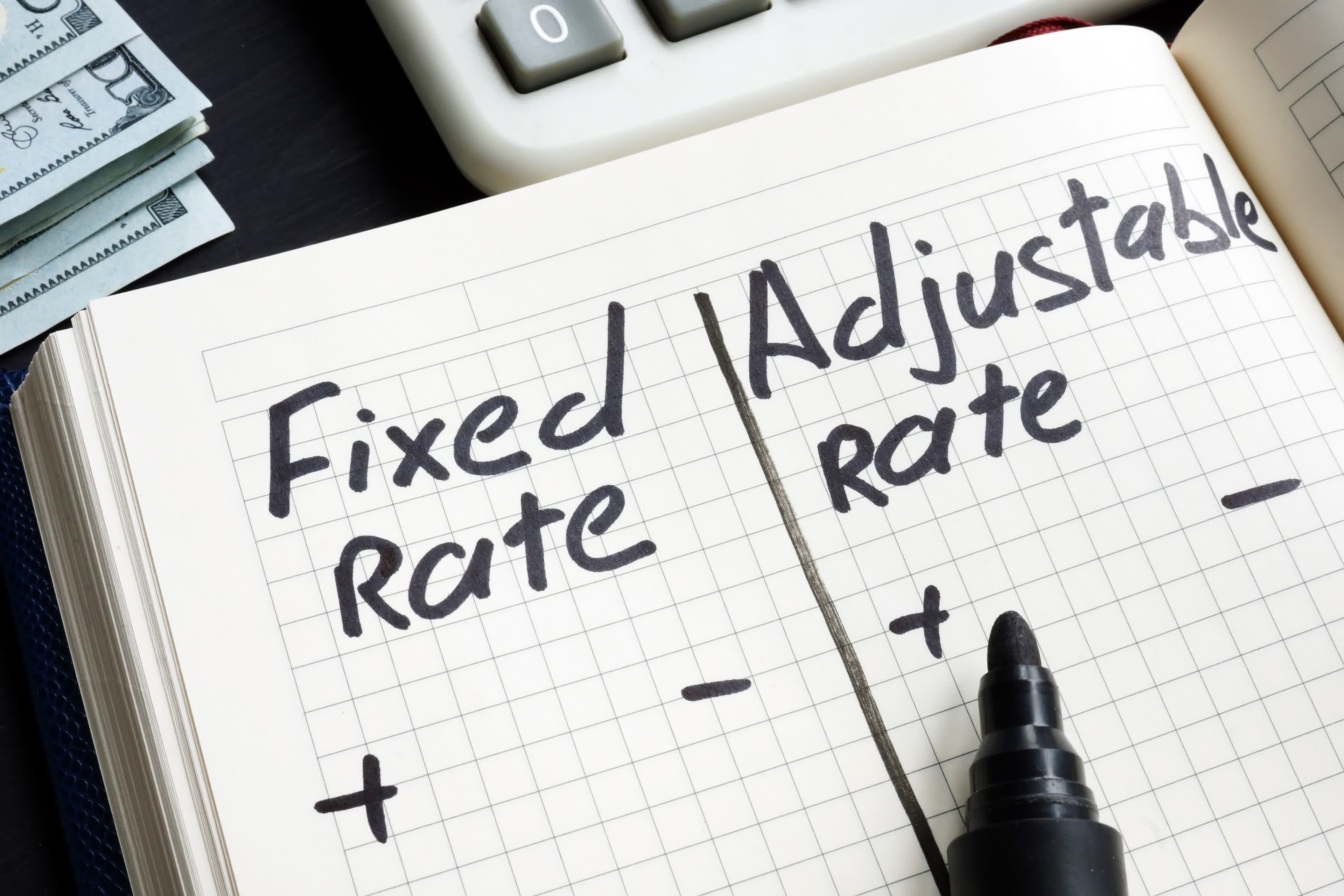
A notebook comparing fixed-rate versus adjustable-rate mortgages
Quick answer

A fixed-rate mortgage keeps the same interest rate for the whole loan, so your principal and interest never change. An ARM (adjustable-rate mortgage) starts with a lower rate for a few years, then the rate can go up or down based on the market. Choose fixed for stability and a long stay; consider an ARM if you plan to move or refinance before it adjusts.

What this means

The two options manage risk differently.

Fixed: You pay a bit more at the start for the certainty that your rate never changes.
ARM: You get a lower starting rate, but you take on the risk that it could rise after the introductory period.

An ARM is named by its periods. For example, a "5/6 ARM" is fixed for 5 years, then can adjust every 6 months after that.

Step by step

How an ARM works

1
Introductory period. Your rate is fixed and usually lower (for example, 5, 7, or 10 years).
2
First adjustment. After that period, your rate can change.
3
Adjustments continue. The rate updates on a set schedule (for example, every 6 months).
4
Caps limit the change. Rate caps limit how much your rate can rise at each adjustment and over the life of the loan.
5
You can refinance. Many people refinance into a fixed loan before or after the first adjustment. See ARM to Fixed Refinance.

Fixed vs ARM (quick compare)

FeatureFixedARM
Starting rateUsually higherUsually lower
After intro periodNever changesCan rise or fall
Best forLong stays, stabilityShort stays, then move/refinance
RiskVery lowPayment could rise
CapsNot neededLimit how much the rate can move

Understanding ARM caps

Caps protect you from huge jumps. They usually limit:

The first adjustment (how much the rate can rise the first time).
Each later adjustment (how much it can rise each period).
The lifetime (the most it can ever rise above the start).

Always ask your lender for the exact caps before choosing an ARM.

Requirements (at a glance)

ChoiceWhat to consider
FixedComfort with a steady, slightly higher payment
ARMA plan to move or refinance, plus comfort with risk

Benefits

Fixed:
Total stability — the payment never changes.
Easy to budget.
Safe if you stay long term.
ARM:
Lower starting rate and payment.
Can save money if you move or refinance before it adjusts.
Caps limit how much it can rise.

Potential drawbacks (the honest part)

Fixed:
Higher starting rate than an ARM.
You must refinance to get a lower rate later.
ARM:
Your payment can rise after the intro period.
"Payment shock" if rates jump.
More complex to understand.
Risky if your plans change and you stay longer than expected.
Real-world California examples

What it looks like in practice

Example 1 — Fixed for the long haul in Sacramento.

Maria plans to stay in her home for many years. She chooses a fixed rate so her payment can never rise, giving her peace of mind.

Example 2 — ARM for a short stay in San Jose.

The Kim family expects to move in about six years. They pick a 7-year ARM with a lower starting rate, planning to sell before it adjusts.

Example 3 — Plans change, refinance needed in San Diego.

Tom took an ARM but ended up staying longer than planned. As the adjustment nears, he refinances into a fixed loan to avoid a rising payment. See ARM to Fixed Refinance.

Examples are for learning only. Your best choice depends on your plans and risk comfort.

Common mistakes

1Choosing an ARM without a plan. Only pick one if you expect to move or refinance.
2Ignoring the caps. Always know how high your rate could go.
3Forgetting plans can change. If you stay longer, an ARM gets riskier.
4Assuming ARMs are always bad. They can fit short-term owners well.
5Picking fixed without comparing. An ARM might save money for a short stay.
6Not planning to refinance. Have a backup if you keep an ARM.
Good questions

Frequently asked questions

A fixed rate never changes. An ARM starts lower but can change after an introductory period.

Next steps

Match the loan to your plan

Match the loan to your plan. If you will stay long term or value certainty, fixed is the safe choice. If you will move or refinance soon, an ARM's lower start could save you money — just know the caps and have a backup plan. EZ Online Mortgage can compare fixed and ARM options for your timeline so you can choose with confidence.

Get a Custom Quote (818) 305-6704
Keep learning

This page is for education only. It is not a loan offer or a promise of rates or terms. ARM terms and caps vary, and your results depend on your individual circumstances. Equal Housing Opportunity · NMLS #362311 · CA DRE #01871814.

CallStart my application